
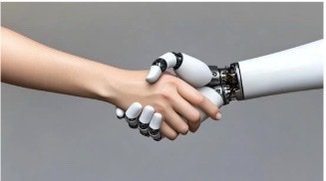
Lately, I’ve been paying attention to the way I speak to technology. And the more I notice it, the more I wonder: Is the rise of AI subtly reshaping our manners?
A Small Moment That Sparked a Big Thought
When I first started using AI tools — chatbots, voice assistants, smart home devices — one of the first things I learned was:
Don’t bother with “please” or “thank you.”
AI doesn’t need niceties. Clear instructions work better.
It made sense logically… but emotionally? Not so much.
It felt unnatural not to use polite language.
It felt abrupt.
It felt… rude.
Over time I got used to it. Until this morning.
As I got into my car, I said aloud:
“Hey, turn on the AC.”
And I noticed how sharp that sounded.
Suddenly, I realised how easily I’d slipped into command-mode — not with a person, but with a machine. Still, it made me pause.
If I speak to technology like that all day, what tone am I training myself to default to?
Are We Becoming More Abrupt Because of AI?
This isn’t just a personal quirk. Researchers are noticing the same trend.
1. Humans Apply Social Norms to Machines
Studies in Artificial Intelligence Review show that we instinctively treat computers, robots, and AI systems as “social actors.”
Even when we know they aren’t human, we still apply human expectations — including politeness.
This is known as the CASA paradigm (Computers As Social Actors).
2. Politeness Changes Based on How Well the AI Performs
Recent research in the International Journal of Social Robotics found something fascinating:
- When robots or AI assistants made errors, people used more politeness.
- When the systems worked smoothly, politeness dropped and commands became more direct.
In other words, our tone shifts based on how the technology behaves — just like with people.
3. We Prefer Polite Machines
Multiple studies have shown that when robots or AI use polite language, people rate them as more trustworthy, approachable, and competent.
It seems our relationship with technology is becoming deeply social, whether we intend it or not.
4. AI Is Learning to Sound Polite Too
New preprints show that text-to-speech AI systems actually adjust their tone to sound more polite when prompted — often by slowing down, softening the pitch, or using more formal phrasing.
So the influence is going both ways:
- We are changing how we speak to machines.
- Machines are learning how to speak back to us.
Why This Matters More Than We Realise
This isn’t about whether Alexa deserves a “thank you.”
This is about habit formation.
1. Communication Habits Spill Over
If we spend hours each day issuing stripped-down commands to devices, our language could slowly become more clipped, instructional, and transactional — even when we’re talking to people.
2. Politeness Builds Trust and Connection
Politeness isn’t about being proper.
It’s about:
- Social ease
- Empathy
- Respect
- Relational wellbeing
These are things we absolutely don’t want to lose.
3. We’re Redefining Social Norms With Technology
As AI assistants become more integrated into daily life, the norms we set today will influence how future generations communicate — with machines and with each other.
4. Designers Need to Pay Attention
There’s now strong evidence that AI systems should be designed with social awareness, not just functionality.
Polite interfaces could encourage polite humans — and vice versa.
My Realisation — and a Small Habit Shift
After noticing how harsh my own command sounded this morning, I decided to test something.
I tried again:
“Hey, could you turn on the AC, please?”
Did my car care?
Of course not.
But I did.
Because how I speak — even to a machine — affects how I show up in the world.
I don’t want bluntness to become my default.
I don’t want efficiency to replace warmth.
I don’t want convenience to erode connection.
Technology shouldn’t shape us away from empathy.
If anything, it should remind us how much empathy matters.
A Question for You
Have you noticed this in your own life?
- Do you speak to your devices politely or directly?
- Has your tone changed over time?
- Do you think AI could gradually influence our social norms?
I’d genuinely love to hear your reflections.
If You Enjoyed This, Here’s More Coming
I’ll be writing more about:
- Human behaviour in a tech-driven world
- How AI is changing communication and connection
- Tools for staying grounded and intentional
- Life design, energy, wellness, and the habits that shape us
If this topic interests you, feel free to follow along or share your thoughts below.
Because in a rapidly shifting world, staying human might just be our greatest strength.
References
Bradshaw, A., & Young, J. E. (2021). Which –if any– politeness strategies should robots use? arXiv. https://arxiv.org/abs/2103.08441
Briggs, P., & Scheutz, M. (2022). Politeness in human–robot interaction: Peacekeeping robots and social norms. arXiv. https://arxiv.org/abs/2205.09549
Chita-Tegmark, M., & Scheutz, M. (2023). Politeness in human–machine interaction: A systematic review. Artificial Intelligence Review, 56, 1189–1215. https://doi.org/10.1007/s10462-023-10540-1
Hasegawa, T., et al. (2025). Slower speech as a politeness cue in text-to-speech systems: A prosodic analysis. arXiv. https://arxiv.org/abs/2511.10693
Lammers, S., Parekh, P., & Fischer, K. (2025). User sentiment and politeness in human–robot interaction: Effects of performance and task success. International Journal of Social Robotics. Advance online publication. https://doi.org/10.1007/s12369-025-01282-x
Nass, C., & Moon, Y. (2000). Machines and mindlessness: Social responses to computers. Journal of Social Issues, 56(1), 81–103. https://doi.org/10.1111/0022-4537.00153
Reeves, B., & Nass, C. (1996). The media equation: How people treat computers, television, and new media like real people and places. Cambridge University Press. https://doi.org/10.1017/CBO9781139162100